

Healthy soil is the foundational engine of any thriving lawn, garden, or agricultural field. While surface-level care like watering and applying fertilizer is important, true long-term plant hea The Foundations of Soil Health: Understanding pH, Liming, and Core Aeration
lth depends on what is happening beneath the surface. When plants struggle, the root cause is often invisible to the naked eye: improper chemical balance or severely compacted soil. By understanding the fundamentals of soil pH, the chemical power of liming, and the structural benefits of core aeration, you can unlock your soil’s true potential. Trey’s Lawn Service can assist you with caring for your yard.
Demystifying Soil pH and Why it Matters
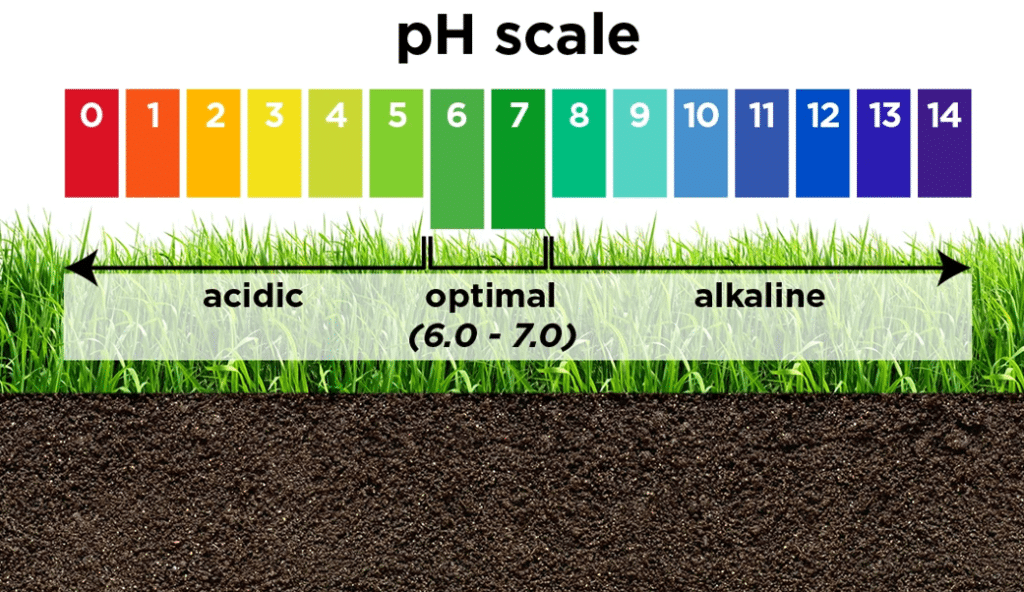
Soil pH is a measure of how acidic or alkaline your soil is, operating on a logarithmic scale from 0.0 to 14.0. A pH value of 7.0 is neutral, while anything below 7.0 is acidic, and anything above is alkaline. Because the scale is logarithmic, a soil with a pH of 5.0 is ten times more acidic than soil with a pH of 6.0, and one hundred times more acidic than a neutral soil. Most common plants and turfgrasses thrive in a slightly acidic to near-neutral range, typically between 6.0 and 7.0.
The primary reason soil pH matters is nutrient availability. When soil shifts too far into the acidic or alkaline zones, essential nutrients—like nitrogen, phosphorus, and potassium—become chemically locked or bound to soil particles. Even if you apply high-quality fertilizers, a bad pH means your plants physically cannot absorb those nutrients. Highly acidic soils can also cause toxic accumulations of elements like aluminum and iron, which stunt root development and severely restrict plant growth. Soils naturally become acidic over time due to heavy rainfall leaching away basic minerals, organic matter decomposition, and the routine use of ammonium-based fertilizers.
The Role of Liming in Balancing Soil
When a diagnostic soil test reveals that your soil has become excessively acidic, the most effective and time-tested corrective action is a lime treatment. “Liming” involves applying ground agricultural limestone (calcium carbonate) or dolomitic lime (which contains both calcium and magnesium carbonate) to the soil.
Liming restores the soil’s health through several key mechanisms:
- Neutralizing Acidity: The carbonate in the lime chemically reacts with the excess hydrogen ions in the soil solution, transforming them into harmless water and carbon dioxide, effectively raising the pH.
- Unlocking Nutrients: By moving the pH back into the optimal 6.0 to 7.0 zone, liming breaks the chemical bonds locking up vital fertilizers, maximizing your nutrient efficiency.
- Boosting Microbial Activity: Beneficial soil microorganisms and earthworms thrive in neutral pH conditions. A proper lime treatment stimulates these microbes, which actively break down organic matter and recycle natural nutrients back into the root zone.
- Supplying Essential Minerals: Agricultural lime provides a steady supply of calcium and magnesium, two critical secondary macronutrients needed to build strong plant cell walls and support photosynthesis.
Because lime takes time to dissolve and react with the soil profile, it works gradually. It is best applied in the fall or early spring to give the amendment ample time to stabilize the soil chemistry before peak growing seasons.
Reversing Compaction: Why Core Aeration Matters
Even if your soil chemistry is perfectly balanced, your plants will still suffocate if the physical structure of the soil is compromised. Soil compaction occurs when heavy foot traffic, lawn equipment, or natural weather patterns press soil particles tightly together, eliminating the microscopic air pockets between them. Heavy clay soils are particularly vulnerable to this compaction.
When soil turns hard as a rock, water cannot infiltrate the ground, resulting in heavy runoff and standing puddles. Furthermore, roots are starved of the vital oxygen they need for respiration, leaving them weak, shallow, and unable to withstand drought or disease.
Core aeration is the mechanical process of removing small, finger-sized cylinders or “plugs” of soil and thatch from the ground. It is arguably the single most critical structural improvement you can make for compacted soil, delivering immediate physical benefits:
- Relieving Physical Pressure: Removing the soil plugs instantly breaks up the compacted matrix, creating room for the surrounding soil to loosen and expand.
- Opening Air and Water Channels: The open holes act as direct pathways, allowing oxygen, rainwater, and nutrients to penetrate deep into the subterranean root zone.
- Driving Deeper Root Growth: With the physical barriers removed, roots can stretch deeper into the profile, building a robust, drought-resistant foundation.
- Accelerating Thatch Breakdown: The soil cores left on the surface contain beneficial microbes that help naturally decompose excess thatch layers, converting old organic debris back into rich nutrients.
The Perfect Synergy
For the ultimate soil renovation, core aeration and liming should be performed together. Aerating your soil right before spreading lime creates a direct highway for the limestone to wash deep down into the root zone rather than sitting on top of the turf.
By regularly testing your soil, adjusting its chemistry with precise lime applications, and physically opening it up through core aeration, you solve the dual hidden issues of nutrient locking and root suffocation. Investing in the health of your soil transforms the unseen foundation, resulting in a vibrant, resilient, and beautifully green landscape above.
Give Trey’s Lawn Service a call today.